
Sebastien Notari
CEO of Beehive
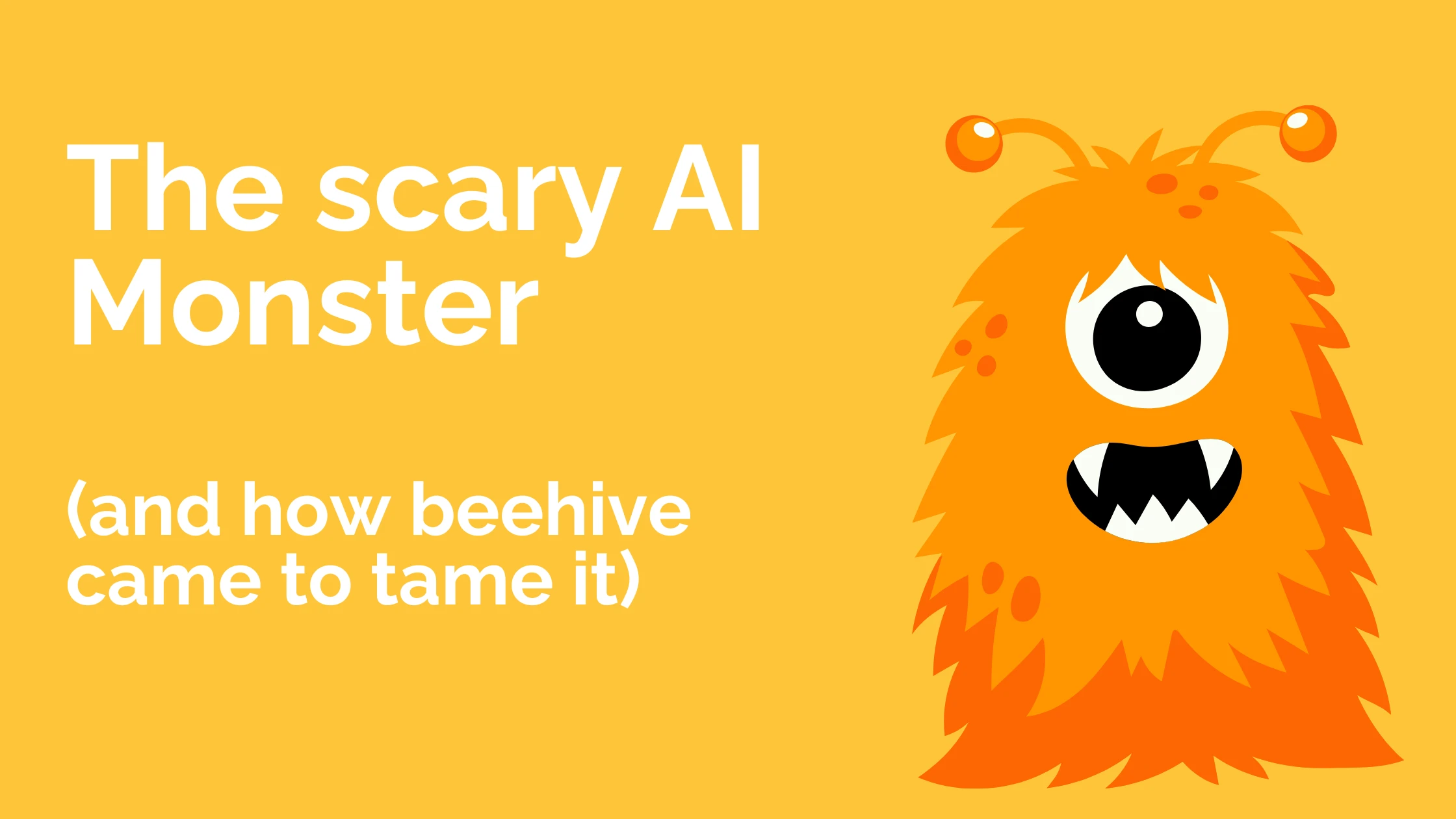
The AI conversation in the media is dominated by the biggest, most dramatic stories: robots replacing workers, trillion-dollar valuations, systems that can write novels and generate videos in seconds. That’s a terrifying monster for a small business owner trying to figure out if they should switch their booking software.
The reality for small businesses is far less scary — and far more useful. This is the story of how we figured that out, and why it led us to build Beehive.
The Monster in the Room
When ChatGPT launched at the end of 2022, it changed something in the public consciousness almost overnight. Suddenly AI wasn’t a concept from science fiction or a tool reserved for PhD researchers. It was something anyone could use, right now, in a browser.
That democratization was genuinely exciting. But it also unleashed a wave of hype that has made it genuinely hard for small business owners to understand what AI actually means for them.
The headlines went from “AI can write emails” to “AI will replace your entire workforce” in about six months. Every software company started adding “AI-powered” to their marketing. Tools that had existed for years were suddenly rebranded as AI tools. Consultants started charging for “AI strategy sessions.”
For a restaurant owner in Pointe-Claire, a contractor in Kirkland, or a boutique owner in Beaconsfield, all of this noise landed as a single overwhelming message:
“You’d better figure out AI, or you’ll be left behind. But also, it’s incredibly complicated. Good luck.”
That’s the monster. Not the technology itself. The noise around it.
What We Saw Underneath the Hype
Here’s what we observed while building Beehive and talking to hundreds of small business owners: most of them were already using AI without realizing it.
The autocorrect on their phone. The spam filter in their email. The product recommendations on their supplier’s website. The chatbot on their bank’s homepage. All of these are AI — and none of them required a strategy session or a computer science degree.
The real question was never “should small businesses use AI?” They already were. The question was: which AI-powered tools are actually worth adopting, and which ones are just hype with a new price tag?
That question — “which tools are actually worth it for MY business?” — is the exact question Beehive was built to answer.
How We Tamed It: Building Trax
When we set out to build Beehive, we made a deliberate choice: we weren’t going to build AI for the sake of AI. We were going to use it to solve a specific, real problem that small business owners face every day.
That problem was software paralysis. Too many options. No clear guidance. No one to help a business owner figure out what actually fits their situation.
So we built Trax — Beehive’s AI advisor. Trax isn’t a chatbot that regurgitates product descriptions. It’s trained to ask the right questions, understand business context, and give a personalized recommendation that a real advisor would give. The kind of guidance that used to require hiring a consultant or knowing the right person.
What makes Trax different from a review site algorithm isn’t the technology. It’s the intent. Trax is designed to serve the business owner — not to serve the software vendors paying for placement.
We also made a choice that surprised some people: we made Beehive completely free. Because we believe that AI-powered guidance shouldn’t be a luxury reserved for businesses that can afford consultants. Every small business owner deserves a trusted advisor in their corner.
What AI Actually Looks Like for a Small Business in 2026
Let’s take the monster out of the shadows and show it in plain light. Here’s what AI realistically means for a small business owner today:
An AI advisor (like Trax) that asks you the right questions and recommends software that fits your specific workflow, budget, and industry — in minutes, not weeks
Scheduling tools that automatically fill gaps in your calendar and send client reminders without you lifting a finger
Invoicing software that flags overdue payments, drafts follow-up messages, and predicts your cash flow for the next 30 days
CRM tools that surface which customers are most likely to return — and which ones might need a check-in
Booking systems that handle rescheduling, waitlists, and confirmations automatically so you’re not managing your inbox at 10pm
None of this requires a technical background. None of it requires understanding how AI works under the hood. It just requires choosing the right tools — which is exactly where Beehive comes in.
The Monster Was Never the Technology
We’ve come to believe that the real barrier between small business owners and AI isn’t the technology. It’s the way it’s been communicated.
AI has been presented as something you need to master, adopt wholesale, or risk being disrupted by. That framing serves the companies selling AI products and the consultants building AI strategies. It doesn’t serve the person running a five-table restaurant or a two-person renovation business.
For small businesses, AI isn’t a monster to fear or a revolution to lead. It’s a set of tools — some of them genuinely useful, some of them overpriced hype — that you adopt one at a time, when and if they make your operations better.
Beehive exists to help you tell the difference. No jargon. No pressure. No agenda other than helping you find what actually works.
The monster was never the AI. It was the noise. And we built Beehive to cut through it.
Curious what AI tools actually make sense for your business?
Let Trax, Beehive’s AI advisor, figure it out for you — free, in under 5 minutes.
About Beehive: Beehive is a free AI advisor helping small and medium-sized businesses across Canada find the right software. Founded by Sébastien and Robert, two Montreal entrepreneurs who believe every small business deserves trusted guidance. Try it free at gobeehive.ai.